
PCBL Chemical Ltd's subsidiary, Nanovace Technologies Ltd, has formed a new wholly-owned subsidiary, Nanovace Advanced Materials Ltd, to focus on advanced battery materials and next-generation energy storage technologies for various sectors including electric vehicles and consumer electronics.
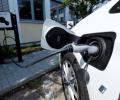
The Delhi government is set to equip its industrial training institutes (ITIs) with advanced labs to train young people in power electronics, electric vehicles, and the automotive sector, aiming to create a skilled workforce ready for industry demands.
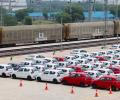
India's Ministry of Power has notified the third phase of Corporate Average Fuel Economy (CAFE-III) norms for passenger vehicles, effective from April 1, 2027, which set relatively softer efficiency targets for lighter cars and demand greater improvements from heavier vehicles, a move expected to benefit manufacturers like Maruti Suzuki India.

The Indian government's proposal to extend the operating life of certain battery-electric, CNG, and hydrogen vehicles under national permits by five years could significantly improve their total cost of ownership (TCO) and residual values, according to industry experts.

Researchers at NIT Rourkela have patented a novel hybrid energy-storage system designed to significantly improve the efficiency and lifespan of electric vehicle batteries. This innovation addresses common issues like low power density and thermal stress by integrating supercapacitors with a simplified architecture, making EVs more reliable, especially in urban driving conditions.

Suzuki Motor Corporation is set to revolutionise its operations by halving vehicle development times and significantly boosting efficiency by 2030, while committing to a diverse multi-powertrain strategy that includes BEVs, hybrids, and carbon-neutral fuels.

The new range brings Ola's 46-series LFP cells to its most affordable scooter lineup aimed at India's mass-market electric vehicle (EV) buyers.

JSW MG Motor India has unveiled ADAPT, India's first multi-powertrain new energy vehicle (NEV) platform, designed to support electric, hybrid, plug-in hybrid, and range-extender electric vehicles. The company plans to launch one electric SUV and one plug-in hybrid SUV based on this architecture during FY27, aiming to broaden its NEV portfolio and accelerate adoption in India.

JSW Group and China's SAIC Motor are in discussions for the next round of capital support for JSW MG Motor India, aiming to expand manufacturing capacity beyond 220,000 units annually to an ambitious one million vehicles and broaden its new-energy vehicle (NEV) portfolio.

Mercedes-Benz India's Managing Director & CEO Santosh Iyer stated that demand continues to outstrip supply, particularly for the CLA electric vehicle, with over 1,000 orders and deliveries extending to March-April 2027. The company could have sold an additional 1,000 vehicles if supply had been adequate.

Geopolitical disruptions have made shipping times unpredictable and raised costs for Volvo Car India, which may have to increase vehicle prices if the situation persists, its Managing Director Jyoti Malhotra said on Monday.

Spreading risks in sourcing raw materials for electric vehicle (EV) manufacturing is "very critical" and the government can play a key role by enabling access to these from multiple locations worldwide, said Vivek Srivatsa, chief commercial officer at Tata Passenger Electric Mobility, on Friday while stressing the need for faster localisation, especially of batteries.

India's flagship motor show Auto Expo 2023 kicked off on Wednesday with the global unveiling of Suzuki Motor Corporation's concept electric SUV 'eVX' which is slated to hit the market by 2025. The company's Indian arm Maruti Suzuki India is among the major manufacturers participating in the show that has returned after three years. The Concept eVX is a mid-size electric SUV concept designed and developed by Suzuki Motor Corporation (SMC), Japan. It will be powered by a 60 kWh battery pack offering up to 550 km of driving range on single charge.

The proposal caught auto makers by surprise.
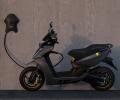
The soaring prices of metals like lithium, nickel and cobalt, which are the primary constituents of the cell, as well as supply chain bottlenecks, are also pushing up the cost of batteries

Suzuki will produce EVs for the Indian market and will supply some of them to Toyota, which will provide technical support.

Automobile dealers in India are reporting healthy bookings ahead of Navratri and Dussehra, with the Federation of Automobile Dealers Associations (Fada) indicating strong confidence in a pickup in deliveries from mid-October, despite a high base from last year's GST-led surge.

Japanese automaker Honda plans to introduce over 10 new models, including electric vehicles and compact SUVs, in India by 2030, identifying India as one of its three key markets for future growth.

This number is more than the total number (1,071) of electric cars sold in India in calendar year 2019. MG has stopped registrations for the ZS and will cater to 2,409 of the total bookings.

Mercedes-Benz India is exploring a larger role for plug-in hybrid electric vehicles (PHEVs) in its portfolio, with plans to potentially introduce the technology in more models beyond the newly launched S-Class plug-in hybrid. This strategy aims to cater to luxury car buyers who are hesitant about fully electric vehicles due to concerns over charging infrastructure and range.

Joint crack team of Maruti, Tata Motors, M&M to develop hybrid cars in India

In August, Hyundai recorded its highest ever domestic sales for the month with 54,396 units sold, marking a 23.6 per cent Y-o-Y increase. The Creta Electric currently anchors Hyundai's mass-market electric portfolio, while the Ioniq 5 caters to the premium end
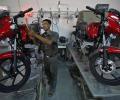
Bajaj Auto plans to increase its annual production capacity by nearly 25 per cent, from around 7 million to over 9 million vehicles, in the coming quarters. This expansion is driven by strong export demand and rapid growth in electric vehicles, which have stretched current capacity across key product segments.

Protect your vehicle from the unpredictable monsoon season by understanding essential motor insurance add-ons like Engine Protect and Zero Depreciation, crucial for covering damages from floods, waterlogging, and preventing costly out-of-pocket expenses.

India is set to launch Bharat Vecto, its first certification tool for assessing the fuel efficiency and CO2 emissions of medium and heavy commercial vehicles, by December, with a full launch targeted for the Bharat Mobility Global Expo in February 2027.

While charger deployment is yet to begin, the scheme has supported the sale of 2.65 million EVs as of July 22.

BMW Group India says every Re 1 depreciation in the rupee against the euro trims its profit margin by about 1 per cent, prompting the company to consider further price increases.

The national budget 2019-20 had an outlay of Rs 10,000 crore for Phase-II of the Faster Adoption and Manufacturing of Hybrid and Electric Vehicles scheme to boost electric mobility and increase the number of EVs in commercial fleets.

Gujarat, Telangana to roll out policies to encourage manufacturing

Skoda Auto is strategically navigating the competitive Indian automotive market by prioritising profitable growth, exploring new powertrain options like CNG and a limited diesel return, and gearing up for a locally produced electric SUV, all while expanding its retail footprint.
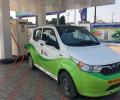
There are four things that stand out in China's strategy for electric vehicles, says Vandana Gombar.

JSW Motors, part of the JSW group, is set to enter India's passenger vehicle market with plans to launch 15 new-energy vehicles (NEVs) over the next four years, with deliveries commencing from December 2026.

The Indian government has ordered the removal of three Chinese mobile applications - BAT-BMS, Lossigy, and Epoch-i-ion - from app stores, citing their alleged misuse to remotely disable battery-operated vehicles in India, amid heightened cybersecurity concerns.

'Now that all the early adopters have the electric car, governments are backing down in some countries because they do not have the money to subsidise so much.'

Nissan Motor India aims to achieve a fourfold increase in domestic sales, targeting 100,000 units annually, and export another 100,000 vehicles from its Chennai plant by financial year 2027-28 (FY28), marking a significant revival of its presence in the Indian passenger vehicle market.

Volkswagen, a long-standing but minor player in India's fiercely competitive automotive sector, is now exploring a strategic partnership with the JSW group, aiming to revitalise its market presence, enhance profitability, and potentially establish India as a key export hub for electric vehicles.
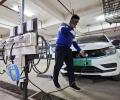
New Delhi's timing couldn't have been worse, both for India's fledgling electric vehicle (EV) sector and prospective electric bike buyers. It was hard to miss the perfect storm brewing for India's EV industry since early 2022. On one hand, you had several accidents involving battery fires that unnerved consumers; on the other, uncertainty had crept in over subsidies.
Tata Motors Passenger Vehicles is gearing up for the next phase of electric vehicle adoption in India, targeting over 30% EV penetration by FY31. The company plans to launch four new products and over ten refreshes by FY31, expanding its portfolio to ten EV nameplates. This strategy aims to move beyond early adopters to engage the early and late majority consumers, focusing on enhanced range, faster charging, and improved battery technology.
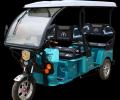
A series of flip-flop on policies and a non-existent charging infrastructure are the biggest challenge in achieving the target of selling 6-7 million hybrid and electric vehicles by 2020.
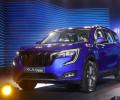
Mahindra & Mahindra's Q1FY27 results missed consensus estimates due to declining gross margins, but strong demand for its SUV portfolio and strategic price hikes are expected to drive near-term gains, particularly in the auto segment, despite headwinds in farm equipment.
